Construction Cost Estimating | Updated 20226
Every construction project begins with a number. That number — whether it’s a rough ballpark scribbled on a napkin or a meticulously compiled cost breakdown spanning dozens of line items — will follow your project from its first stakeholder meeting all the way to the final punch list. Get it right, and you build on solid ground. Get it wrong, and no amount of talent on the job site can save you from the financial quicksand ahead.
So when project owners, developers, and contractors ask whether hiring a professional construction estimator is worth the cost, they’re really asking a more fundamental question: can I afford to guess? The short answer, backed by decades of industry data, is a resounding no — and the following breakdown explains exactly why.
92%of cost overruns trace back to inaccurate initial estimates
15–30%average cost overrun on projects without professional estimating
3–5×typical ROI on professional estimation services
$0.05–0.15estimating cost per dollar of project value
What Does a Construction Estimator Actually Do?
A professional construction cost estimator is far more than someone who adds up material costs. They are part analyst, part market researcher, part risk manager, and part project strategist. Their work touches every phase of a project’s financial architecture — from schematic design through bid submission and into value engineering.
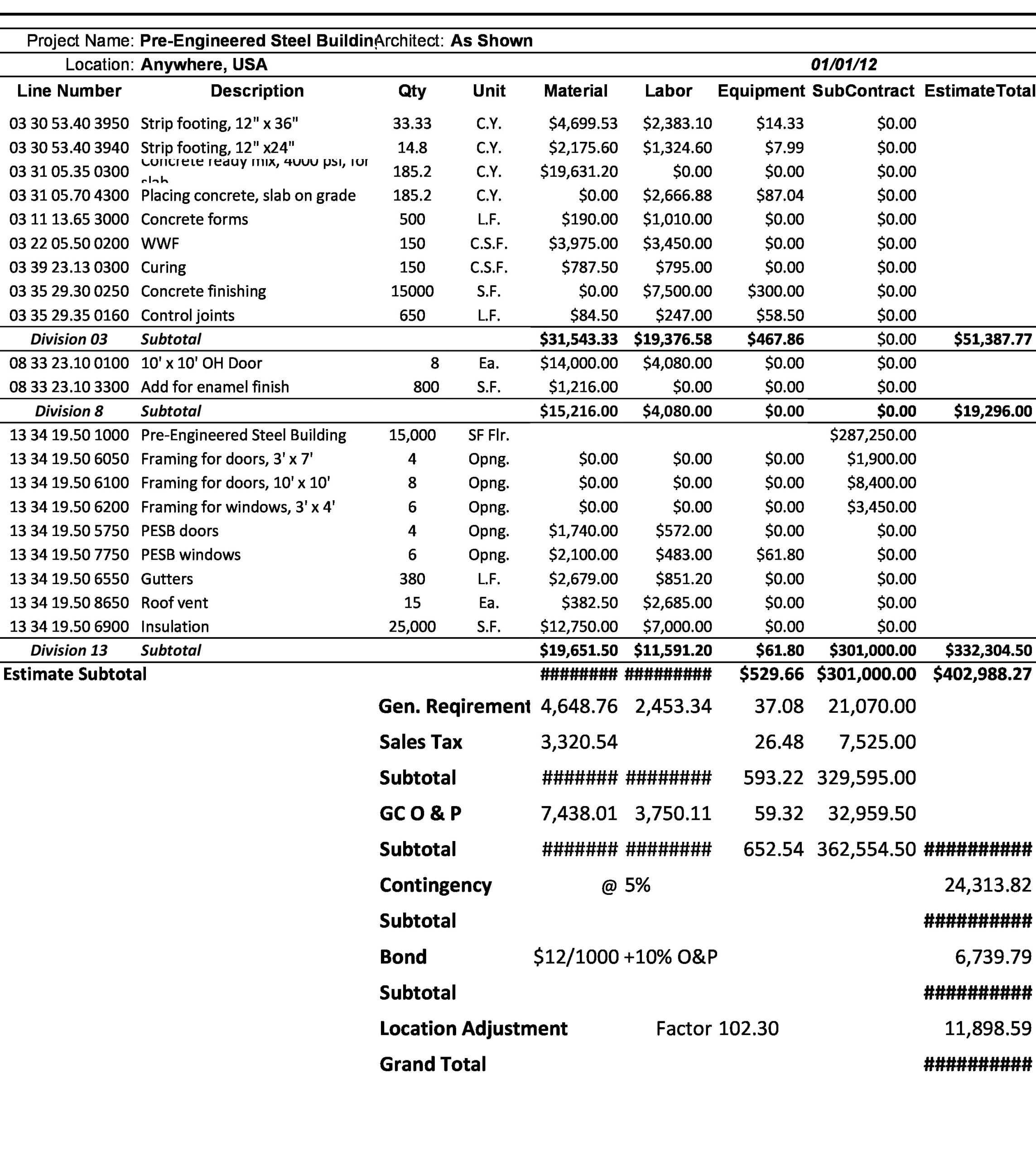
At the core of their work is quantity takeoff the precise measurement and enumeration of every material, system, and piece of labor required to build a structure. Beyond that, they apply current local market pricing, subcontractor rates, labor productivity data, waste factors, and regional cost indices to produce a number you can actually build a budget around.
- Detailed material quantity takeoffs from architectural and engineering drawings
- Labor cost analysis based on local union and open-shop wage rates
- Subcontractor bid solicitation and scope leveling
- Overhead and profit markup calculation appropriate to project type
- Contingency and escalation allowance modeling
- Value engineering recommendations to optimize cost without sacrificing scope
- Bid strategy and competitive pricing analysis
- Life-cycle cost analysis for long-term capital planning
Done well, this process transforms a set of drawings into a financial roadmap — one that lenders trust, owners can commit to, and contractors can build from.
“An estimate is not a guess with a spreadsheet attached. It is a defensible financial projection built on current market data, methodical takeoffs, and professional judgment.”— Construction Industry Institute, Project Controls Best Practices
The Hidden Costs of DIY Estimating
Many owners and smaller contractors attempt to estimate their own projects to save money on professional services. On the surface this seems logical — why pay someone else to count bricks and add up labor hours? In practice, however, DIY estimating consistently costs far more than it saves. Here is why:
Time is money you don’t account for
A professional estimator completes a detailed takeoff in a fraction of the time it takes an untrained individual. Every hour you spend wrestling with blueprints and pricing databases is an hour you’re not managing your business, cultivating relationships, or overseeing active projects. The opportunity cost alone often eclipses the estimator’s fee.
You don’t know what you don’t know?
Experienced estimators carry institutional knowledge that no software can replicate. They know that concrete pours in north Texas run longer due to soil bearing conditions. They know that HVAC rough-in in dense urban areas like Brooklyn demands premium labor scheduling. They factor in permit delays, inspection sequences, and seasonal labor availability — nuances that routinely blindside first-time estimators.
Cost Databases Go Stale Fast
Material costs have been extraordinarily volatile since 2020. Lumber, steel, copper, and concrete have all seen dramatic swings. An estimate based on prices even six months old can be off by 12–20% on materials alone. Professional estimators maintain real-time relationships with suppliers and subcontractors, ensuring their numbers reflect today’s market — not last quarter’s.
Rule of thumb: For every $100,000 in project value, a miscalculation of just 10% represents a $10,000 shortfall. On a $2 million commercial build, that’s a $200,000 gap between your budget and your reality — a gap that typically emerges six months into construction, when it’s too late to course-correct.

The ROI Argument | Numbers That Make the Case
Professional construction cost estimating services typically charge between 0.5% and 1.5% of the total project cost, depending on complexity, scope, and region. A $1 million project might carry an estimating fee of $5,000 to $15,000. Let’s put that in context.
According to data compiled by the Construction Industry Institute, projects with professional cost management and accurate upfront estimates come in within 10% of budget 76% of the time. Projects relying on informal or owner-prepared estimates exceed budget by 15% or more in over half of cases. On that same $1 million project, a 15% overrun represents $150,000 — ten times the cost of a professional estimating service.
The math is straightforward. What’s less obvious is the downstream value: improved lender confidence, stronger contractor relationships, smoother change order management, and the ability to make informed go/no-go decisions before a single dollar hits the ground.
Regional Expertise Matters Enormously
One of the most underappreciated dimensions of construction cost estimating is its profound geographic specificity. A cost estimate prepared without deep familiarity with a particular market is worth very little — and potentially dangerous. Labor rates, material suppliers, subcontractor ecosystems, building code requirements, and permit fee structures vary enormously from one region to the next.
Here is how regional cost dynamics play out across key U.S. markets:
Brooklyn, NY
Construction Cost Estimating Services in Brooklyn NY must account for some of the nation’s highest union labor rates, compressed site access, strict local law compliance (LL97, etc.), and premium logistics costs. Estimates here carry a 20–35% location factor above the national average.
Austin, TX
Construction Cost Estimating in Austin reflects the city’s explosive growth surge. Subcontractor demand remains historically high, driving premiums on MEP trades. Estimators familiar with Austin’s permitting pipeline and soil variability are essential on ground-up projects.
Dallas, TX
Cost Estimating in Dallas covers one of the most active commercial real estate markets in the country. Prevailing wage requirements on public work, combined with high steel and precast demand, require estimators with current local subcontractor relationships.
Washington
Construction Cost Estimating Service in Washington involves navigating Davis-Bacon wage determinations, extensive permitting timelines, and an active federal construction market that competes aggressively for labor and materials.
Georgia
Georgia Construction Cost Estimating spans a wide cost range — from Atlanta’s urban premium to rural Southeast markets with constrained supply chains. Local estimators know which zip codes carry which multipliers.
North California
Construction Cost Estimating Service in North California — encompassing Sacramento, Fresno, and the Central Valley corridor — involves union labor requirements, seismic code compliance costs, and significant wildfire defensible space regulations that all carry cost implications.
Arizona
Construction Cost Estimating in Arizona must account for extreme heat construction protocols, caliche soil mitigation, and Phoenix’s robust but highly competitive subcontractor market. Concrete and masonry costs differ materially from national benchmarks.
The takeaway is direct: an estimator who works in your region brings local intelligence that no national database or generic square-footage calculator can replicate. When you hire a professional with market-specific expertise, you’re not just buying numbers — you’re buying the accumulated knowledge of hundreds of local projects, relationships, and hard-won lessons.
When Is Hiring an Estimator Most Critical?
While professional estimating adds value on virtually any project, its impact is most pronounced in specific scenarios. If your project falls into any of these categories, the question isn’t whether to hire an estimator — it’s whether you can afford not to.
Competitive bidding environments
When you’re submitting a bid against multiple contractors, accuracy is existential. Overbid, and you lose the work. Underbid, and you win work that will erode your margin and strain your operations. Professional estimators thread this needle with discipline, helping you build bids that are both competitive and financially sound.
Projects with complex systems integration
Any project with significant MEP scope, specialty finishes, phased construction, or technical infrastructure demands a level of estimating sophistication that goes well beyond spreadsheet arithmetic. The interdependencies between systems — HVAC coordination, electrical load calculations, structural interfaces — require estimators who understand how these systems price out and interact.
Projects seeking financing
Lenders and investors require credible cost documentation before committing capital. A professionally prepared estimate signals project maturity and financial discipline. Conversely, an owner-prepared estimate with obvious gaps or unsupported assumptions can stall financing or trigger costly conditions.
Public or prevailing wage work
Government-funded projects come with significant wage, documentation, and compliance requirements. Estimating prevailing wage work incorrectly doesn’t just hurt your margin — it can expose you to audit liability, contract penalties, and debarment. Professionals who regularly estimate public work understand these requirements intimately.
For smaller residential projects: Even a $200,000 home renovation benefits from professional estimating. Scope creep, hidden condition allowances, and seasonal labor pricing are just as treacherous at this scale — they simply manifest in smaller absolute dollars but equivalent percentage pain.
What to Look for in a Construction Estimating Service
Not all estimating services are created equal. When evaluating providers, look for professionals and firms with demonstrated competency across these dimensions:
- Certified Professional Estimator (CPE) or equivalent credential from ASPE
- Project type specialization aligned with your work (commercial, residential, industrial, civil)
- Deep familiarity with your target market and local subcontractor ecosystem
- Proficiency with current estimating platforms (Bluebeam, PlanSwift, ProEst, RSMeans)
- Track record of estimates validated against actual project costs
- Clear deliverable structure: detailed takeoffs, unit cost summaries, and executive summaries
- Willingness to stand behind their work and provide value engineering alternatives
- Transparent pricing and defined scope of estimating services
References from past clients in your sector and geography are worth more than any credential. A firm that has successfully estimated a dozen commercial office builds in your market brings irreplaceable contextual knowledge.
The Verdict | Worth Every Dollar
The question posed at the start of this article deserves a clear answer: yes, hiring a construction estimator is worth the cost. Not conditionally, not in most cases, but as a matter of professional practice on any project where financial accountability matters.
The fee for professional estimation services is modest relative to total project cost — and negligible relative to the cost of the problems an accurate estimate prevents. Cost overruns, failed bids, lender pushback, contractual disputes, and blown contingencies all trace back, with remarkable consistency, to the quality of the original estimate.
Whether your project is in Brooklyn, Austin, Dallas, Washington, Georgia, North California, or Arizona — whether it’s a $400,000 renovation or a $40 million commercial development — the discipline of accurate, professional cost estimation is the foundation everything else rests on.
Build that foundation right, and the rest follows. Cut that corner, and the bill comes due — always at the worst possible moment.
Final Thoughts
From Brooklyn to Arizona, our certified estimators deliver market-specific, construction-ready cost estimates you can build from with confidence.Request an Estimate Today
This article is produced for informational purposes by construction cost professionals. Regional cost data referenced reflects current market conditions as of 2026. All project costs cited are representative averages and will vary based on scope, specification level, and local market conditions. Perfect Estimator provides professional construction cost estimating services across the United States.