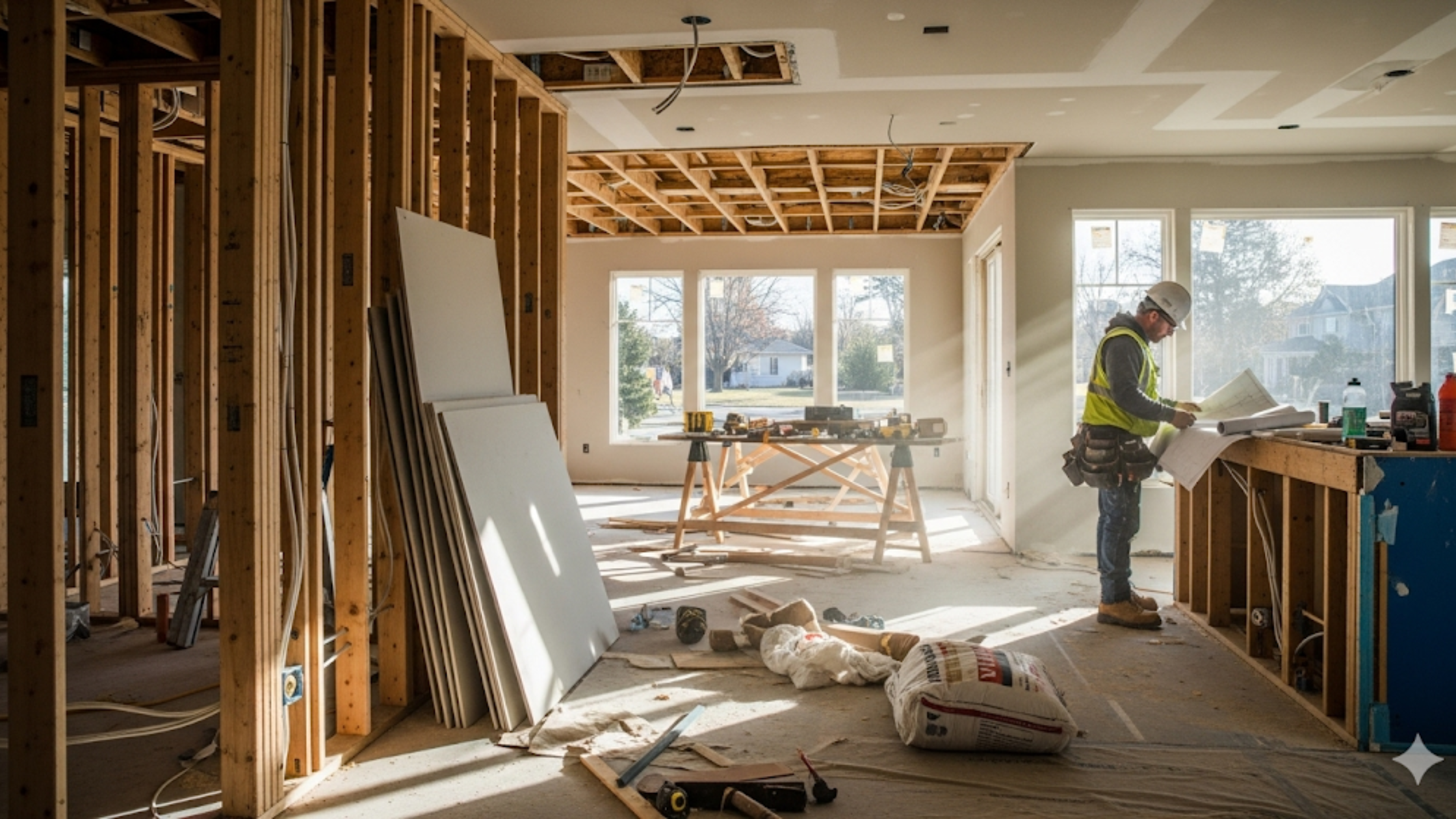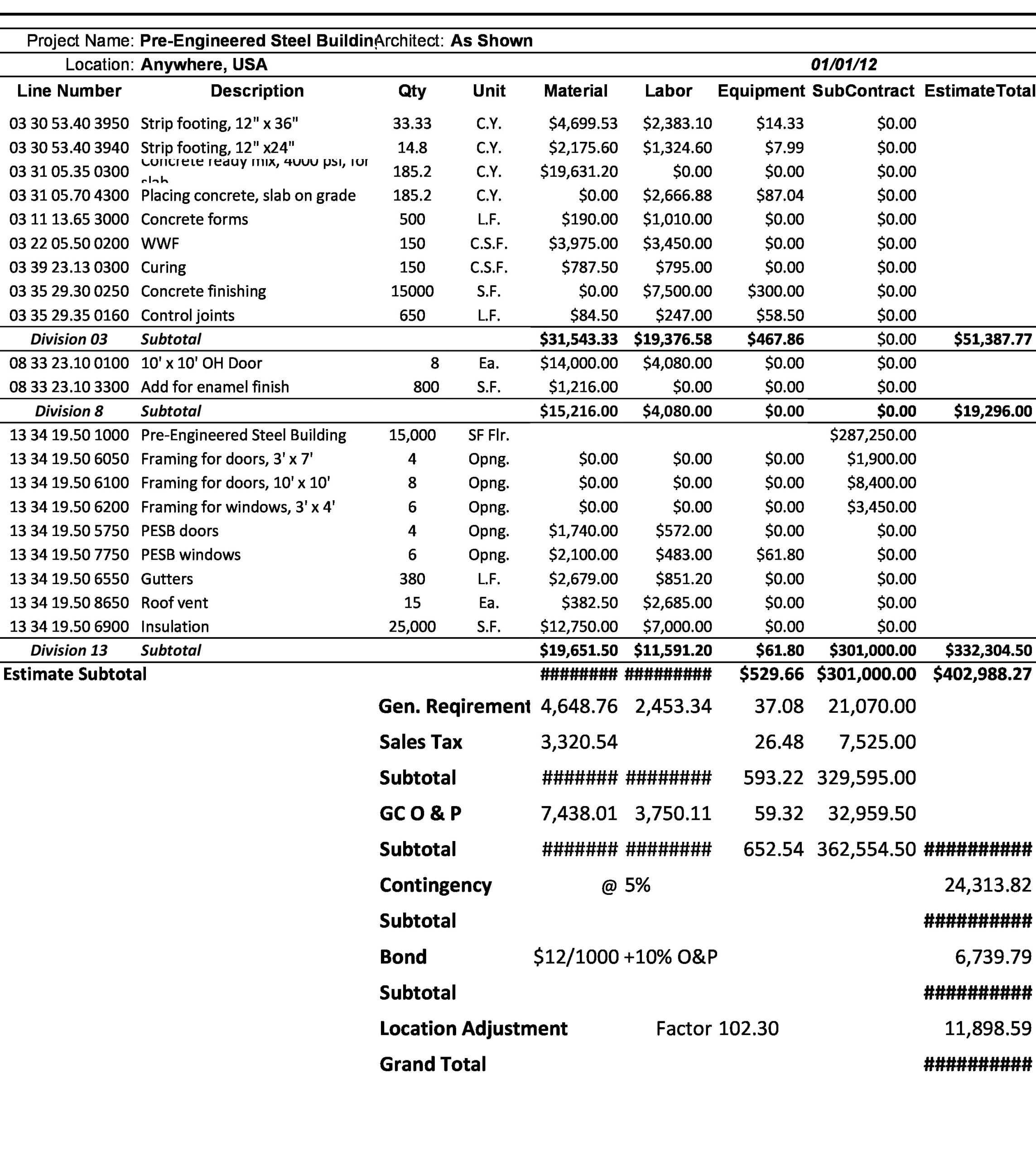
Construction estimating is the backbone of every successful project. Whether you are a general contractor in New York, a residential builder in California, a commercial developer in Texas, or a subcontractor in Florida, the accuracy of your cost estimates determines whether you win bids, stay profitable, and deliver projects on time. Yet every year, thousands of contractors across the United States lose money, miss deadlines, or fail to win competitive bids — not because of poor craftsmanship, but because of avoidable construction estimating mistakes.
In this comprehensive guide, we will walk you through the top 10 construction estimating mistakes that cost contractors thousands of dollars annually. More importantly, we will show you exactly how to avoid them. From inaccurate material takeoffs to ignoring regional labor rates, each mistake we cover here is grounded in real-world estimating challenges faced by contractors in states like New York, California, Texas, Florida, Georgia, Colorado, Arizona, Washington, New Jersey, and North Carolina.
Understanding these errors — and knowing how to fix them — is the difference between a profitable project and a financial disaster. Let us dive in.
Mistake #1: Inaccurate Material Takeoffs
What Is a Material Takeoff and Why Does It Matter?
A material takeoff (MTO) is the process of quantifying every material needed for a construction project based on the architectural and engineering drawings. This includes concrete, lumber, drywall, masonry, steel, roofing materials, insulation, and all MEP (mechanical, electrical, plumbing) components. A flawed material takeoff is one of the most common and costly construction estimating errors in the industry.
When estimators skip over detailed drawing reviews or rely on rough approximations, the resulting quantity takeoff errors lead to either over-ordering or under-ordering of materials. Over-ordering wastes money on excess inventory and storage. Under-ordering causes project delays, emergency procurement costs, and frustrated clients.
Real-World Impact by State
In California, where material costs are significantly higher than the national average, even a 5% error in a material takeoff on a $2 million commercial project translates to $100,000 in wasted costs. In Texas, where large-scale warehouse and industrial construction is booming in cities like Houston, Dallas, and Austin, inaccurate lumber and steel takeoffs are frequently cited as root causes of budget overruns. In New York, particularly in Manhattan and Brooklyn where space is limited and re-ordering is logistically complex, getting the quantities right the first time is absolutely critical.
How to Avoid This Mistake
- Always perform a thorough, drawing-by-drawing review before creating your material list.
- Use professional estimating software such as PlanSwift, Bluebeam, or On-Screen Takeoff to digitize blueprints and calculate accurate quantities.
- Cross-reference specifications against current supplier pricing databases like RSMeans or local vendor quotes.
- Have a second estimator review the takeoff for any item valued over $50,000 before finalizing.
- Account for material waste percentages based on project type. Typically add 10% for drywall, 5-7% for tile, and 3-5% for concrete.
Mistake #2: Underestimating Labor Costs
Why Labor Cost Underestimation Is So Dangerous
Labor is typically the single largest cost driver in any construction project, often accounting for 40% to 60% of total project costs. Yet underestimating labor costs remains one of the most prevalent construction estimating mistakes across every trade. This happens when estimators use outdated labor rate data, fail to account for prevailing wage requirements, or do not properly calculate crew productivity rates for the specific conditions of a project.
Labor cost underestimation does not just reduce profit margins. On publicly funded projects or projects governed by state-level prevailing wage laws — such as the Davis-Bacon Act in federally funded projects — underbidding labor can expose contractors to legal liability and even project suspension.
State-Specific Labor Cost Considerations
Labor rates vary significantly by geography. In New York City, union labor rates for electricians and plumbers routinely exceed $100 per hour when benefits and overhead are included. In California, particularly in the Bay Area and Los Angeles, skilled trade workers command some of the highest wages in the country. By contrast, labor rates in North Carolina, Georgia, and Arizona tend to be lower, but even there, recent construction booms have pushed wages upward. Contractors operating in Washington State must also account for Seattle’s high cost of living, which directly affects labor pricing.
How to Avoid This Mistake
- Always use current, geographically adjusted labor rate data from RSMeans CostWorks, NECA labor tables for electrical work, or local union hall rate sheets.
- Calculate labor by production units, not by rough estimates. For example, estimate drywall installation by square feet per crew hour, not by lump-sum guesses.
- Factor in overtime potential, especially if the project has a tight completion deadline.
- Include employee benefits, payroll taxes, workers’ compensation insurance, and general liability insurance in your labor burden calculations.
- Adjust for local prevailing wage requirements in all public or government-funded projects regardless of state.
Mistake #3: Failing to Review the Full Set of Project Documents
The Hidden Costs in Plans and Specifications
One of the most overlooked construction estimating mistakes is failing to conduct a thorough review of the entire project document set. An estimate should never be based solely on architectural drawings. Structural drawings, MEP drawings, civil plans, landscape drawings, and the complete set of project specifications all contain items that directly affect cost. Failing to read the specifications can lead to missing allowances, overlooking special material requirements, or missing testing and inspection requirements that add significant cost.
This mistake is especially common in competitive bidding situations where estimators are under time pressure. The rush to submit a bid before competitors leads to corner-cutting in document review, which ultimately results in bid preparation mistakes and scope gaps that cost contractors during project execution.
Examples of What Gets Missed
- Special inspection requirements such as structural concrete testing and soil compaction testing, which can add $10,000 to $50,000 to project costs.
- Specific manufacturer or product requirements in Division 1 of the specifications that require more expensive materials than assumed.
- Temporary facilities and site security requirements, including fencing, site trailers, and portable restrooms.
- Bonding and insurance requirements that may exceed a contractor’s standard policies.
- LEED certification requirements, green building standards, or energy efficiency benchmarks that require upgraded systems.
How to Avoid This Mistake
- Create a systematic document review checklist and follow it for every project without exception.
- Always read Division 1 General Requirements fully, as this section controls all project-wide requirements.
- Flag and quantify all allowances listed in the specifications, and include them as separate line items in your estimate.
- Hold a pre-bid walkthrough and ask the owner or architect to clarify any ambiguous specifications before submitting your bid.
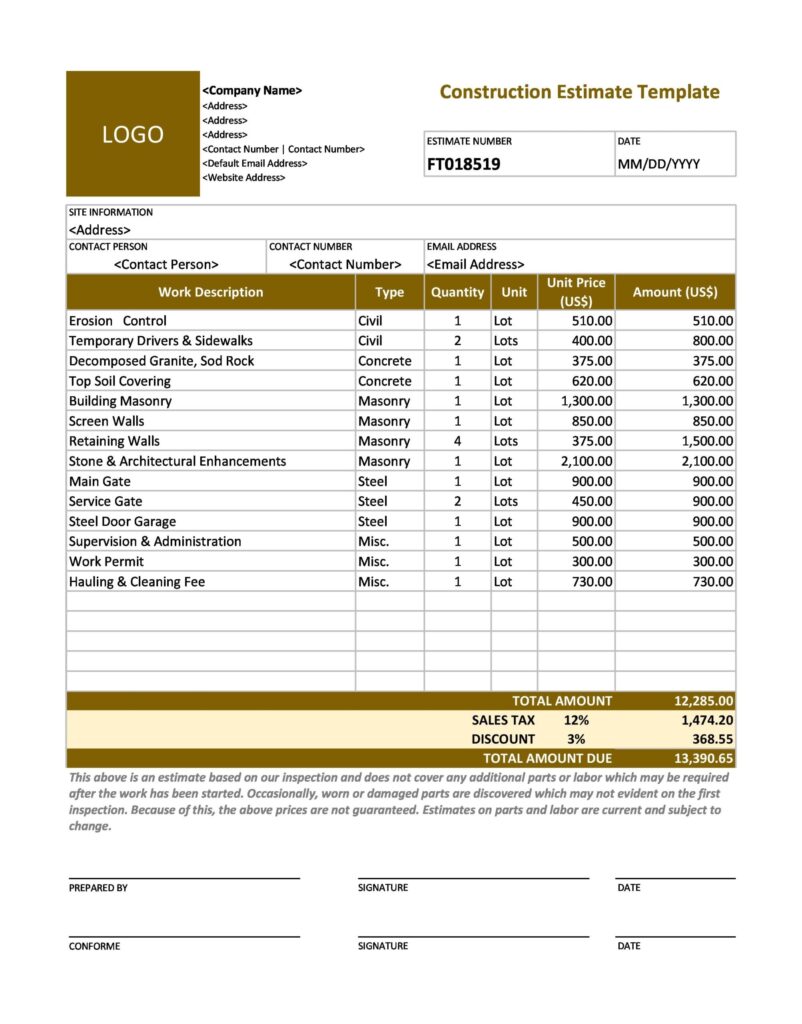
Mistake #4: Ignoring Site Conditions and Location Factors
Why Site Conditions Can Derail Even the Best Estimates
Every construction site is different. Soil conditions, site access, topography, existing utilities, environmental restrictions, and proximity to material suppliers all affect construction costs in ways that generic estimating software cannot automatically account for. Ignoring these site-specific factors is one of the most financially damaging construction project budget overrun causes in the industry.
For example, a project in rural Colorado may have significantly higher equipment mobilization costs compared to the same project in downtown Denver. A waterfront development in New Jersey may require sheet piling and dewatering that could add hundreds of thousands of dollars to the civil work budget. A project in Phoenix, Arizona during summer months must account for heat-related productivity losses and additional hydration costs for workers.
Location-Specific Cost Factors by State
In Florida, particularly in Miami-Dade and Broward counties, projects near the coastline must comply with stringent hurricane wind resistance codes, requiring more expensive structural systems and impact-rated openings. In California, seismic zone requirements significantly increase structural engineering and construction costs for anything above a single story. In Georgia, particularly in Atlanta, rapid development has created site access challenges that increase logistics costs. In Washington State, steep terrain in the Pacific Northwest creates unique earthwork challenges that can add 15 to 25 percent to site work costs.
How to Avoid This Mistake
- Always conduct a personal site visit before submitting an estimate on any project larger than $100,000.
- Review geotechnical reports or commission a soil test if ground conditions are unknown or suspect.
- Identify the nearest material suppliers and factor in delivery costs and lead times, especially for large-volume items like ready-mix concrete.
- Research local building code requirements that add cost, such as seismic bracing in California, wind uplift requirements in Florida, or frost line depths in northern states like New York and Colorado.
- Include adequate contingency allowances for unforeseen site conditions — typically 5 to 10 percent for ground-up construction on developed sites.
Mistake #5: Using Outdated Cost Data
How Stale Data Destroys Bid Accuracy
The construction industry is one of the most price-volatile sectors in the economy. Material prices for lumber, steel, copper, concrete, and PVC pipe fluctuate monthly based on global supply chains, tariff policies, fuel costs, and regional demand. Using last year’s material pricing data — or even last quarter’s data — in today’s estimate is a recipe for significant financial losses. This is one of the most frequent causes of bid preparation mistakes across the industry.
The volatility became especially pronounced after 2020 and 2021, when supply chain disruptions caused lumber prices to triple, steel prices to double, and copper prices to surge. While markets have since stabilized, ongoing global economic uncertainties mean that cost data must be verified and refreshed continuously. In states like Texas and Florida, which experienced unprecedented construction booms, local material price premiums have remained elevated well above national averages.
How to Avoid This Mistake
- Subscribe to and regularly update cost data from current sources such as RSMeans Online, Gordian, or Dodge Data and Analytics.
- Call your top three material suppliers for live quotes on any project larger than $500,000 rather than relying solely on database pricing.
- Include material escalation clauses in contracts for projects with construction schedules exceeding 12 months.
- Monitor the Producer Price Index (PPI) for construction materials monthly to stay ahead of market trends.
- For long-duration projects in high-growth markets like Dallas-Fort Worth, Phoenix, or Charlotte, NC, build in a material escalation allowance of 3 to 8 percent per year of construction.
Mistake #6: Overlooking Overhead and Profit Margins
The Silent Profit Killer
Many contractors, especially those who are newer to the business or eager to win competitive bids, make the critical mistake of underestimating or completely omitting overhead and profit in their estimates. Overhead includes all the costs of running your business that are not directly tied to a specific project: office rent, administrative staff salaries, insurance premiums, vehicle expenses, software subscriptions, marketing, and professional fees. Failing to recover overhead through project billing means your business is effectively subsidizing your clients’ projects.
Profit margin is equally important. Net profit in construction typically ranges from 2% to 8% depending on project type, size, and competition level. On a $1 million project, a contractor who forgets to include 5% overhead and 4% profit walks away $90,000 short of what they need to stay in business. This mistake is disproportionately common among small-to-medium contractors in highly competitive markets like Los Angeles, Chicago, and New York City.
How to Avoid This Mistake
- Calculate your annual overhead costs and divide by your annual revenue volume to determine your overhead rate percentage. Apply this rate to every estimate.
- Never submit a bid without a clearly defined profit margin that reflects the risk level of the project.
- Use a cost-plus pricing model for high-risk or high-uncertainty projects to protect your margins.
- Review and update your overhead rate quarterly as your business grows and overhead costs change.
- Track actual overhead recovery on completed projects and adjust your rate accordingly to ensure you are recovering all indirect costs.
Mistake #7: Poor Subcontractor Bid Management
Why Unverified Sub Bids Cause Major Problems
General contractors who rely heavily on subcontractor bids must manage those bids with great care. One of the most common subcontractor bid mistakes is accepting the lowest sub bid without verifying scope, qualifications, or completeness. A low subcontractor bid that does not include all required work items creates a scope gap that the general contractor may ultimately have to absorb. This is a widespread problem across every state, but it is particularly pronounced in fast-moving markets where subcontractors are overbooked and may submit incomplete or hurried bids.
Additionally, failing to level subcontractor bids — meaning comparing them line-by-line to ensure they cover the same scope — makes it impossible to make an accurate comparison. The lowest number on paper is often not the best value when scope gaps are accounted for.
How to Avoid This Mistake
- Always request at least three competitive bids from qualified subcontractors for each major trade.
- Create a bid leveling spreadsheet to compare every subcontractor bid line by line against the project scope requirements.
- Require all subcontractors to submit a detailed list of inclusions and exclusions with their bid.
- Verify subcontractor licensing, bonding, insurance, and capacity before including their bid in your estimate.
- For projects in New York, California, or Texas, always confirm that subcontractors are familiar with and compliant with local code requirements and prevailing wage laws.
Mistake #8: Neglecting Change Order Risk and Contingencies
Change Orders Are Inevitable — Plan for Them
Every experienced contractor knows that change orders are a normal part of construction. Design changes, unforeseen site conditions, owner-requested modifications, and material substitutions all generate change orders that affect project costs. The mistake is not in the fact that change orders occur — it is in failing to account for the risk of change orders in the original estimate. An estimate that carries no contingency for change orders is an estimate that will run over budget.
Contingency planning is especially important on renovation and remodel projects, where hidden conditions inside walls, under floors, or within existing mechanical systems routinely create unexpected costs. In states like New York and New Jersey, where older building stock is prevalent, renovation projects almost always encounter surprises once demolition begins.
Recommended Contingency Allowances by Project Type
- New commercial construction on clean sites: 3 to 5 percent contingency.
- Residential new construction with design not fully completed: 5 to 8 percent contingency.
- Commercial tenant improvement or interior renovation: 8 to 12 percent contingency.
- Historic building renovation or adaptive reuse: 15 to 20 percent contingency.
- Underground or below-grade work: 10 to 15 percent contingency due to high uncertainty of ground conditions.
How to Avoid This Mistake
- Always include a clearly labeled contingency line item in your estimate, sized appropriately for the project type.
- Review completed projects to compare estimated versus actual costs and calibrate your contingency rates accordingly.
- Establish a formal change order process with your client before the project begins, including timelines for approval and pricing.
- Never absorb change order costs quietly. Document every change and issue a formal change order to recover all associated costs.
Mistake #9: Rushing the Estimating Process
Speed Kills Accuracy in Construction Estimating
In a competitive market, contractors feel tremendous pressure to respond to bid invitations as quickly as possible. This urgency often leads to rushed estimates that skip critical steps, miss line items, or fail to properly account for project-specific risks. The irony is that winning a bid with an inaccurate estimate is often worse than losing the bid, because you are now locked into a contract at a price that cannot support profitable project execution.
Rushed estimating is a particular problem for contractors in high-activity markets. In cities like Houston, Phoenix, Charlotte, and Orlando, where construction pipelines are full, estimating teams are often stretched thin, reviewing dozens of bids simultaneously and inevitably cutting corners. The result is a pattern of systematic estimating errors that compound over time and erode profitability.
How to Avoid This Mistake
- Develop a standard estimating workflow with defined time allocations for each phase: document review, takeoff, pricing, subcontractor solicitation, and final review.
- Use standardized estimating templates for recurring project types so that your team is not starting from scratch on every bid.
- Set a minimum internal review time for every estimate regardless of deadline pressure. A 24-hour review before submission should be non-negotiable.
- Be selective about which bids you respond to. Chasing every opportunity with a rushed estimate is less effective than targeting the right opportunities with a thorough one.
- Invest in estimating software that automates repetitive tasks, such as quantity calculations and unit pricing lookups, to free up your estimators’ time for judgment-based decisions.

Mistake #10: Not Learning from Past Projects
Historical Data Is Your Most Valuable Estimating Asset
Every completed construction project is a goldmine of estimating data. The difference between estimated and actual costs for materials, labor, subcontractors, and equipment tells you exactly where your estimates are consistently accurate and where they regularly miss. Contractors who fail to conduct post-project cost analyses and feed those lessons back into their estimating process are doomed to repeat the same mistakes on every new bid.
This is one of the most overlooked but most impactful improvements a contracting firm can make. A contractor in Atlanta who finishes a 50,000-square-foot warehouse and discovers that their MEP subcontractor costs ran 18% over estimate now knows something incredibly valuable for every future warehouse bid in Georgia. A residential builder in San Diego who tracks lumber costs on ten consecutive projects has a far more accurate lumber pricing model than any database can provide.
How to Build a Project Cost Feedback System
- After every project close-out, conduct a formal cost analysis comparing the original estimate to actual costs by line item.
- Document variances and root causes. Was the miss due to scope change, estimation error, market price movement, or productivity issues?
- Create a company-specific cost library that tracks actual unit costs for common work items by project type and geography.
- Share post-project analysis findings with your estimating team regularly through monthly performance review meetings.
- Use project management software that integrates with your estimating platform so that actual cost data flows automatically into your historical database.
Quick Reference: Top 10 Construction Estimating Mistakes at a Glance
Use the table below as a quick checklist before submitting any construction bid.
| # | Mistake | Core Risk | Primary Fix |
|---|---|---|---|
| 1 | Inaccurate Material Takeoffs | Cost overruns and material shortages | Use digital takeoff software |
| 2 | Underestimating Labor Costs | Margin erosion and legal exposure | Use current geo-adjusted rate data |
| 3 | Incomplete Document Review | Scope gaps and missed cost items | Create and follow a document checklist |
| 4 | Ignoring Site Conditions | Unexpected field and logistics costs | Conduct site visits and geotech review |
| 5 | Using Outdated Cost Data | Underbidding on materials | Get live supplier quotes on every bid |
| 6 | Missing Overhead and Profit | Business operating at or below break-even | Calculate and apply overhead rate |
| 7 | Poor Sub Bid Management | Scope gaps absorbed by the GC | Level all sub bids line-by-line |
| 8 | No Contingency Planning | Absorbing change order costs out-of-pocket | Include project-appropriate contingency |
| 9 | Rushing the Estimate | Systematic errors across multiple bids | Build a standard estimating workflow |
| 10 | Not Learning from History | Repeating the same mistakes | Conduct post-project cost analysis |
Understanding the Broader Picture: Key Construction Estimating Concepts
Construction cost estimating is a discipline that draws on a wide range of technical knowledge and practical experience. To consistently produce accurate estimates, it helps to understand the full spectrum of concepts that influence project costs. The following topics are closely related to the estimating mistakes discussed above and represent areas where continued education pays significant dividends.
Construction Cost Estimating vs. Project Budgeting
While often used interchangeably, construction cost estimating and project budgeting are distinct processes. Estimating is the technical process of calculating the expected costs of a specific scope of work. Budgeting is the financial planning process that allocates those estimated costs within the context of the owner’s financial resources and project goals. Errors in estimating feed directly into budget overruns, which is why improving estimating accuracy is the most effective lever for reducing construction project budget overrun rates.
The Role of Quantity Takeoffs in Accurate Estimating
A quantity takeoff is the foundation of every accurate construction estimate. Without a complete and precise takeoff, all downstream pricing — labor rates, equipment costs, subcontractor bids — is built on a flawed foundation. Quantity takeoff errors are the single most common root cause of inaccurate estimates across all project types, from single-family residential construction in North Carolina to large-scale industrial facilities in Texas. Investing in skilled takeoff professionals or high-quality takeoff software is one of the highest-return investments any estimating department can make.
Bid Leveling and Scope Management
Bid leveling is the process of comparing subcontractor bids on an equal scope basis. This is a critical skill that separates professional estimating teams from amateurs. Without proper bid leveling, a general contractor in Florida may award a mechanical subcontract to the lowest bidder, only to discover mid-project that the low bid excluded ductwork insulation, equipment startup, or commissioning. These scope gaps become expensive change orders that erode the GC’s profit margin.
Estimating Software and Technology
The construction industry has seen a rapid evolution in estimating technology. Platforms like PlanSwift, Bluebeam, ProEst, and Sage Estimating have dramatically improved the speed and accuracy of quantity takeoffs and cost calculations. Artificial intelligence tools are beginning to assist with pattern recognition in historical cost data and automated risk flagging. However, technology is only as effective as the estimator using it. Understanding the underlying principles of construction cost estimating remains essential regardless of which platform is used.
Construction Estimating Challenges Across Key U.S. States
Estimating requirements differ meaningfully from state to state based on labor laws, building codes, material availability, and market conditions. Here is a closer look at how construction estimating mistakes manifest in some of the most active construction markets in the country.
New York
New York, and particularly New York City, presents some of the most complex estimating environments in the United States. Union labor requirements, extraordinarily high labor rates, strict building code compliance, limited site access, and expensive logistics all create conditions where even small estimating errors produce large cost consequences. Contractors must account for New York City-specific requirements such as the NYC Building Code, Local Law 196 safety training mandates, and the Department of Buildings permit requirements when preparing estimates. The five boroughs — Manhattan, Brooklyn, Queens, the Bronx, and Staten Island — each present unique logistical and cost challenges.
California
California’s construction market is one of the largest and most expensive in the world. Seismic design requirements increase structural costs significantly. Title 24 energy code compliance adds cost to mechanical, electrical, and envelope systems. Prevailing wage requirements apply to virtually all public works projects. Environmental compliance, including CEQA requirements, adds pre-construction costs that must be captured in early project estimates. Markets in Los Angeles, San Francisco, San Diego, Sacramento, and the Inland Empire each have distinct cost profiles that estimators must understand in detail.
Texas
Texas is one of the fastest-growing construction markets in the country. Houston, Dallas-Fort Worth, Austin, and San Antonio are all experiencing massive commercial, industrial, and residential construction activity. The lack of a state income tax and a relatively business-friendly regulatory environment attract developers and contractors from across the country. However, Texas heat creates worker productivity challenges, material delivery lead times are increasing due to high demand, and labor shortages are pushing wages higher in major metro areas. Estimators in Texas must stay current on rapidly evolving local market conditions.
Florida
Florida’s construction market is driven by both residential growth and a major focus on coastal and storm-resilient construction. Hurricane wind loads, flood zone requirements, impact-resistant glazing requirements, and elevated foundation systems all add significant cost to Florida projects compared to inland states. Miami-Dade and Broward counties have the strictest wind resistance requirements in the continental United States. Contractors bidding in Florida must thoroughly understand the Florida Building Code and factor its requirements into every estimate.
Georgia
Georgia, particularly the Atlanta metropolitan area, has become a major construction hub driven by data center development, film production studio construction, and large-scale logistics facility projects. The Atlanta market has experienced rapid cost escalation for both labor and materials, and estimators unfamiliar with this market may underprice work relative to current conditions.
Colorado
Colorado, especially the Denver and Front Range metro areas, combines challenging mountain terrain with a strong construction market and growing labor costs. Projects in mountainous areas of Colorado must account for significantly higher site work costs, shorter construction seasons due to weather, and increased equipment mobilization expenses. Denver itself has become a high-cost market comparable to other major Western cities.
Arizona
Arizona, particularly the Phoenix metropolitan area, is one of the fastest-growing major markets in the country. Significant residential and industrial construction activity has stretched subcontractor capacity, driving up prices across most trades. Summer heat in Arizona is extreme, reducing worker productivity and requiring careful scheduling adjustments that affect labor cost calculations.
Washington State
Washington State, particularly Seattle and the surrounding Puget Sound region, combines high labor costs with significant seismic design requirements. Seattle’s proximity to major fault lines means structural engineers require seismic upgrades that add considerable cost to virtually every new building project. Labor costs in Seattle are among the highest in the country for most trades.
New Jersey
New Jersey’s proximity to New York City creates a construction market with high costs and complex regulatory requirements. Union labor dominates much of the commercial construction market. Environmental regulations, particularly around brownfield remediation and wetlands protection, add significant pre-construction and site preparation costs that must be captured in estimates.
North Carolina
North Carolina, especially Charlotte and the Research Triangle region of Raleigh, Durham, and Chapel Hill, is experiencing rapid commercial and residential growth. The market has transitioned from a relatively low-cost environment to a more competitive one over the past several years. Estimators should not rely on older North Carolina cost benchmarks without verifying current local pricing, as the market has evolved significantly.
How Perfect Estimator Can Help You Avoid These Costly Mistakes
At Perfect Estimator LLC, we have spent over 15 years helping contractors, developers, home builders, and real estate investors across the United States eliminate the exact mistakes described in this article. Our team of certified construction estimators provides professional construction cost estimating services that are accurate, detailed, and designed to help you win bids and stay profitable on every project you take on.
We serve clients in New York, California, Texas, Florida, Georgia, Colorado, Arizona, Washington, New Jersey, North Carolina, and throughout the entire United States. Whether you need a complete material takeoff for a single-family home in California, a full MEP estimate for a commercial building in New York, electrical estimating for an industrial facility in Texas, or a comprehensive bid package for a multi-family development in Florida, Perfect Estimator delivers bid-ready estimates with a typical turnaround of 24 to 48 hours.
Our estimating services cover all trades and divisions, including concrete, masonry, lumber and framing, drywall, MEP systems, electrical, roofing, sitework, and all interior and exterior finishes. We use industry-leading software including PlanSwift, Bluebeam, and RSMeans to ensure every estimate reflects current market conditions and accurate regional pricing for your specific project location.
Stop losing money on inaccurate bids. Partner with Perfect Estimator LLC and bid with confidence. Contact our team today at info@perfectestimator.com or call +1 (212) 987-8789 to upload your plans and receive a free quote. New clients receive 30% off their first estimate.