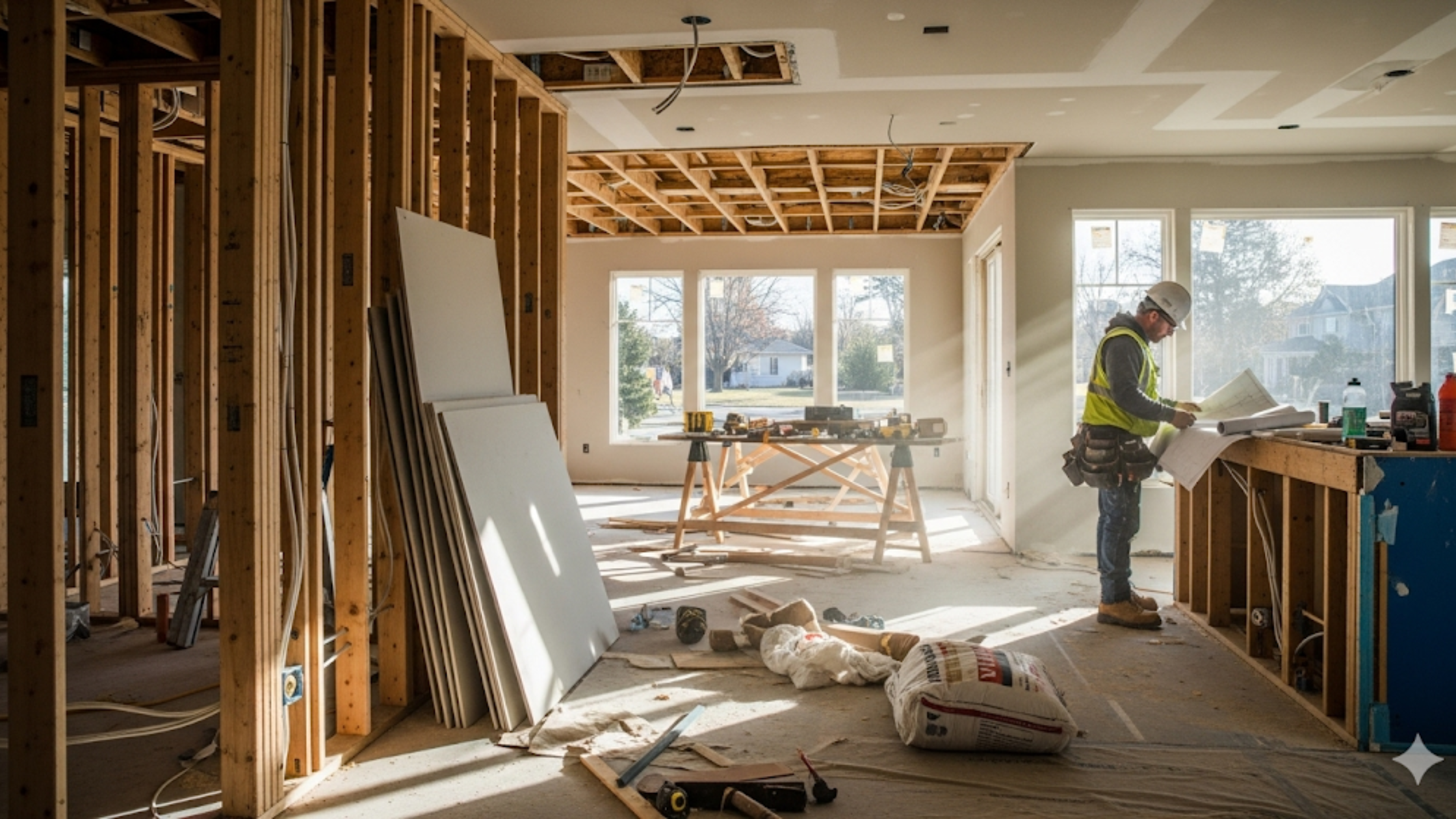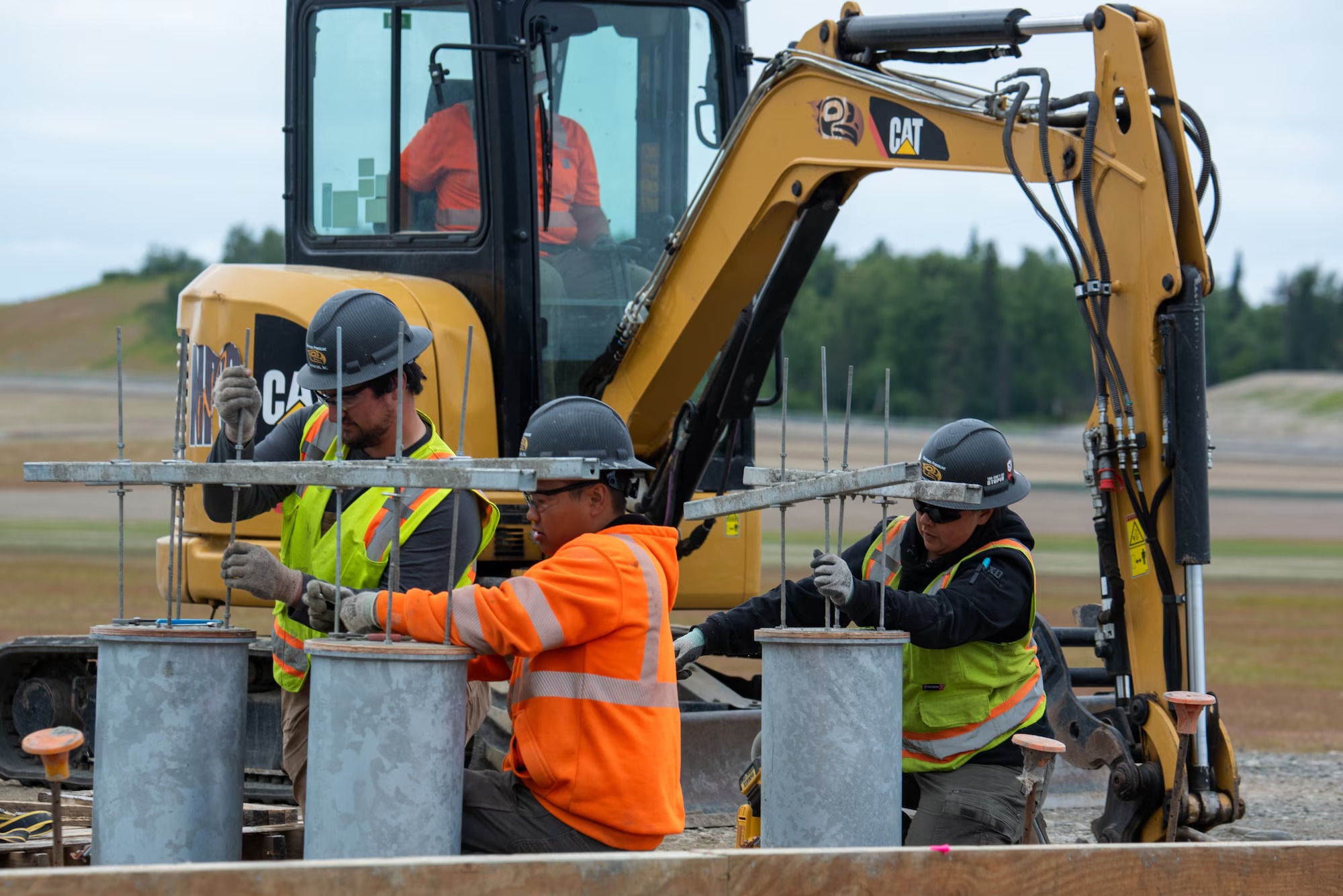
Accurate construction cost estimation is the backbone of every successful building project. Whether you are a general contractor bidding on a new commercial development, a home builder planning a custom residence, or a subcontractor quoting a specialty trade, understanding how to estimate construction costs correctly can mean the difference between winning profitable work and losing money on a job.
Construction estimating is not simply about adding up material prices. It involves a disciplined, step-by-step process that accounts for material quantities, labor hours, equipment usage, subcontractor fees, overhead costs, profit margins, and the unique pricing conditions of the specific state or region where the project will be built.
This guide walks you through the complete process of how to estimate construction costs from start to finish. You will learn the key components of a construction estimate, how to perform a quantity takeoff, how to calculate labor costs, how to account for regional pricing differences across states like California, Texas, New York, Florida, and others, and how to put together a bid-ready estimate package that gives you a competitive edge.
1. Understanding What a Construction Cost Estimate Is
A construction cost estimate is a detailed forecast of all expenses associated with completing a building project. It is produced before construction begins, during the planning and bidding phases, and serves as the financial foundation for the entire project.
A well-prepared estimate includes direct costs, which are the costs tied directly to the physical work on the project, and indirect costs, which include overhead, insurance, bonds, permits, and profit. Together, these give the project owner, contractor, or developer a realistic picture of what the project will cost.
Types of Construction Estimates
There are several types of estimates used at different stages of a project lifecycle:
- Preliminary or Conceptual Estimate: Produced early in the design phase using square footage rates or similar projects as benchmarks. Accuracy is typically within 20 to 30 percent.
- Schematic Design Estimate: Based on early design drawings. More detailed than a conceptual estimate, typically accurate within 15 percent.
- Design Development Estimate: Produced as drawings become more complete. Accuracy improves to within 10 percent.
- Construction Document Estimate: Based on complete drawings and specifications. This is the most detailed and accurate estimate, typically within 5 percent.
- Bid Estimate: The final estimate submitted in a competitive bid. Must be as accurate as possible to win the contract at a profitable price.
2. Gather and Review All Project Documents
Before you can begin estimating, you need to collect and thoroughly review all available project documentation. Trying to estimate without complete information is one of the most common causes of costly errors.
Documents You Need
- Architectural drawings and floor plans
- Structural drawings
- MEP (mechanical, electrical, and plumbing) drawings
- Civil and site drawings
- Project specifications and scope of work
- Geotechnical reports (for foundation and sitework)
- Addenda and RFIs if the project has gone through revisions
Review each drawing set carefully. Look for scope gaps, areas where the drawings may conflict with the specifications, and items that may require clarification from the architect or engineer. Preparing a list of questions or requests for information before estimating reduces the risk of missing scope items.
Also review any owner-furnished items, allowances, and alternates. These must be clearly identified and tracked separately in your estimate so they do not inflate or distort your base bid.
3. Define the Project Scope
Scope definition is the process of clearly identifying everything that is and is not included in your estimate. A well-defined scope protects you from scope creep, disputes over inclusions, and under-pricing work that was assumed to be another contractor’s responsibility.
Start by creating a scope matrix or checklist that covers all divisions of work as outlined in the Construction Specifications Institute (CSI) MasterFormat:
- Division 02 – Existing Conditions (demolition, site investigation)
- Division 03 – Concrete (foundations, slabs, structural concrete)
- Division 04 – Masonry (brick, block, stone)
- Division 05 – Metals (structural steel, miscellaneous metals)
- Division 06 – Wood, Plastics, and Composites (framing, millwork)
- Division 07 – Thermal and Moisture Protection (roofing, insulation, waterproofing)
- Division 08 – Openings (doors, windows, hardware)
- Division 09 – Finishes (drywall, flooring, painting)
- Division 10 – Specialties (toilet partitions, signage, fire extinguishers)
- Division 21 to 28 – MEP and Fire Protection
- Division 31 to 33 – Earthwork, Utilities, and Site Improvements
Going through each applicable division ensures you capture all scope items and know exactly what you are pricing and what falls outside your contract.
4. Perform a Quantity Takeoff
A quantity takeoff (QTO) is the process of measuring and listing every material and item of work required to complete the project. The accuracy of your quantity takeoff directly determines the accuracy of your entire estimate. If quantities are wrong, every downstream cost calculation will be wrong as well.
How to Perform a Quantity Takeoff
Work through the drawings systematically, division by division. Use digital takeoff software such as PlanSwift, Bluebeam Revu, or On-Screen Takeoff to measure directly from PDF or CAD drawings. For each item, record the appropriate unit of measure:
- Linear feet (LF) – for pipes, conduit, framing members, molding, and linear items
- Square feet (SF) – for flooring, drywall, roofing, painting, and surface-area work
- Square yards (SY) – for concrete paving, carpet, and some earthwork
- Cubic yards (CY) – for concrete, earthwork, and excavation
- Each (EA) – for doors, windows, fixtures, and discrete items
- Tons (TON) – for structural steel, aggregate, and asphalt
Key Takeoff Areas
Concrete: Measure all footings, foundations, grade beams, slabs on grade, elevated decks, walls, and columns. Calculate volume in cubic yards. Include waste factors, typically 5 to 10 percent for concrete work.
Masonry: Count bricks, concrete masonry units (CMUs), and stone units. Calculate mortar volumes, reinforcement bar quantities, and grouting requirements. Brick coursing and bond patterns affect material counts.
Framing Lumber: Measure all wall framing, floor framing, roof framing, and structural members. Count studs, plates, headers, joists, rafters, and sheathing panels. Engineered lumber products such as LVL beams and I-joists are measured separately.
Roofing: Measure roof area in squares (1 square = 100 square feet). Include waste factors for valleys, hips, ridges, and penetrations. Count flashings, underlayment, and fasteners.
Drywall: Measure wall and ceiling areas in square feet. Divide by board size to get sheet counts. Add waste factors for cuts, and include taping, joint compound, corner bead, and fasteners.
Electrical: Count all conduit runs by linear feet and size, wire quantities by gauge, panels, breakers, fixtures, devices, and equipment connections.
Plumbing: Count all pipe runs by size and material, fittings, valves, fixtures, and equipment. Sanitary, domestic water, and storm systems must be measured separately.
HVAC: Measure ductwork by the pound or square foot of sheet metal, count equipment pieces, and measure refrigerant piping by linear foot. Include diffusers, grilles, registers, and controls.

5. Calculate Material Costs
Once you have your quantities, calculate material costs by pricing each item. Material prices vary significantly depending on project location, current market conditions, supplier relationships, and project volume. Always use current pricing from local suppliers or regional cost databases rather than relying on outdated national average figures.
Sources for Material Pricing
- Direct quotes from local material suppliers and distributors
- RSMeans Cost Data (regional editions updated annually)
- Local supplier price lists and contractor discount schedules
- Online commodity markets for steel, lumber, and copper, which fluctuate frequently
- Historical project data from similar completed projects
When applying material costs, include all ancillary items that are easy to forget: fasteners, adhesives, sealants, underlayment, blocking, bridging, and protective coatings. These small items can represent 3 to 5 percent of total material costs if overlooked.
Apply appropriate waste factors to each material type. Standard waste factors vary: concrete typically 5 to 8 percent, lumber 10 to 15 percent, tile 10 percent, drywall 8 to 10 percent, and roofing 10 to 15 percent depending on roof complexity.
6. Estimate Labor Costs
Labor cost estimation is often the most challenging part of the estimating process. Labor costs depend on crew productivity rates, local wage rates, union versus non-union requirements, project difficulty, and site conditions. Getting labor wrong is one of the most common reasons contractors lose money on jobs.
How to Calculate Labor Costs
Labor cost is calculated using the formula: Labor Cost = Quantity x Production Rate x Hourly Labor Rate. The production rate is the amount of work a crew can complete in one hour. Use historical data from your own completed projects whenever possible.
Hourly labor rates must account for the full loaded labor cost, not just the base wage. The loaded labor rate includes:
- Base hourly wage
- Payroll taxes (FICA, FUTA, SUTA)
- Workers compensation insurance
- General liability insurance allocation
- Benefits such as health insurance, retirement contributions, and paid leave
- Union fringe benefits where applicable
On average, the loaded labor rate is 30 to 55 percent higher than the base wage depending on the trade, state, and union status. For example, a carpenter with a base wage of $35 per hour may have a loaded rate of $52 to $60 per hour once all burdens are applied.
Regional Labor Rate Differences Across the United States
Labor rates differ dramatically across the United States. Contractors estimating work in high-wage states like California, New York, Massachusetts, or Washington must account for significantly higher labor costs compared to states like Texas, Georgia, or Tennessee. The following are approximate loaded journeyman labor rates by state:
- California: Electricians $85 to $110/hr, Carpenters $75 to $95/hr, Plumbers $90 to $115/hr
- New York: Electricians $95 to $130/hr, Carpenters $85 to $110/hr, Plumbers $100 to $135/hr
- New Jersey: Electricians $85 to $115/hr, Carpenters $75 to $100/hr, Plumbers $88 to $118/hr
- Washington: Electricians $80 to $105/hr, Carpenters $70 to $90/hr, Plumbers $85 to $110/hr
- Massachusetts: Electricians $80 to $108/hr, Carpenters $72 to $95/hr, Plumbers $85 to $112/hr
- Colorado: Electricians $70 to $90/hr, Carpenters $60 to $82/hr, Plumbers $72 to $95/hr
- Arizona: Electricians $55 to $72/hr, Carpenters $45 to $65/hr, Plumbers $55 to $78/hr
- Georgia: Electricians $50 to $68/hr, Carpenters $40 to $58/hr, Plumbers $50 to $70/hr
- North Carolina: Electricians $48 to $65/hr, Carpenters $40 to $58/hr, Plumbers $48 to $68/hr
- Florida: Electricians $50 to $70/hr, Carpenters $42 to $62/hr, Plumbers $52 to $75/hr
- Texas: Electricians $55 to $75/hr, Carpenters $45 to $65/hr, Plumbers $55 to $80/hr
7. Estimate Equipment Costs
Equipment costs include the rental, lease, or ownership cost of construction machinery and tools needed to complete the project. Major equipment categories include:
- Earthmoving equipment: excavators, bulldozers, graders, compactors
- Lifting equipment: cranes, forklifts, boom lifts, scissor lifts
- Concrete equipment: concrete mixers, pumps, vibrators, finishing equipment
- Temporary facilities: generators, dewatering pumps, site lighting, portable toilets
Equipment costs are estimated based on daily, weekly, or monthly rental rates multiplied by the estimated duration of use. Include fuel costs, delivery and pickup charges, and consumables. For owned equipment, use an equipment ownership and operating cost rate that accounts for depreciation, maintenance, insurance, and financing.
8. Price Subcontractor Work
Most general contractors subcontract significant portions of their work to specialty trade contractors. Common subcontracted trades include electrical, plumbing, HVAC, roofing, fire protection, elevator, glazing, and specialty finishes. Subcontractor pricing is obtained through the bid solicitation process.
How to Solicit Subcontractor Bids
- Prepare a complete scope of work document for each trade
- Issue bid invitations to at least three qualified subcontractors per trade
- Set a clear bid due date and format requirements
- Provide all drawings and specifications via a common bid platform
- Hold pre-bid meetings or site walks for complex scope
When subcontractor bids come in, review them carefully. Compare the scope included in each bid against your scope checklist. Low bids may be missing scope items or based on different interpretations of the drawings. Add a subcontractor markup of 5 to 15 percent to cover your general conditions associated with managing each subcontractor.
9. Calculate General Conditions
General conditions are the project-specific overhead costs required to manage and support the construction work. Unlike material and labor costs, general conditions are not tied to a specific trade but support the entire project.
Common General Conditions Items
- Project superintendent and site management labor
- Project manager time allocated to the project
- Site trailer, office equipment, and temporary facilities
- Temporary utilities such as power, water, and gas connections
- Temporary fencing, signage, and site security
- Job site safety program costs and safety equipment
- Layout and surveying
- Cleaning and trash removal throughout construction
- Final cleaning at project completion
- Document control, submittals, and RFI management
General conditions typically represent 5 to 15 percent of total direct construction costs depending on project size, duration, and complexity.
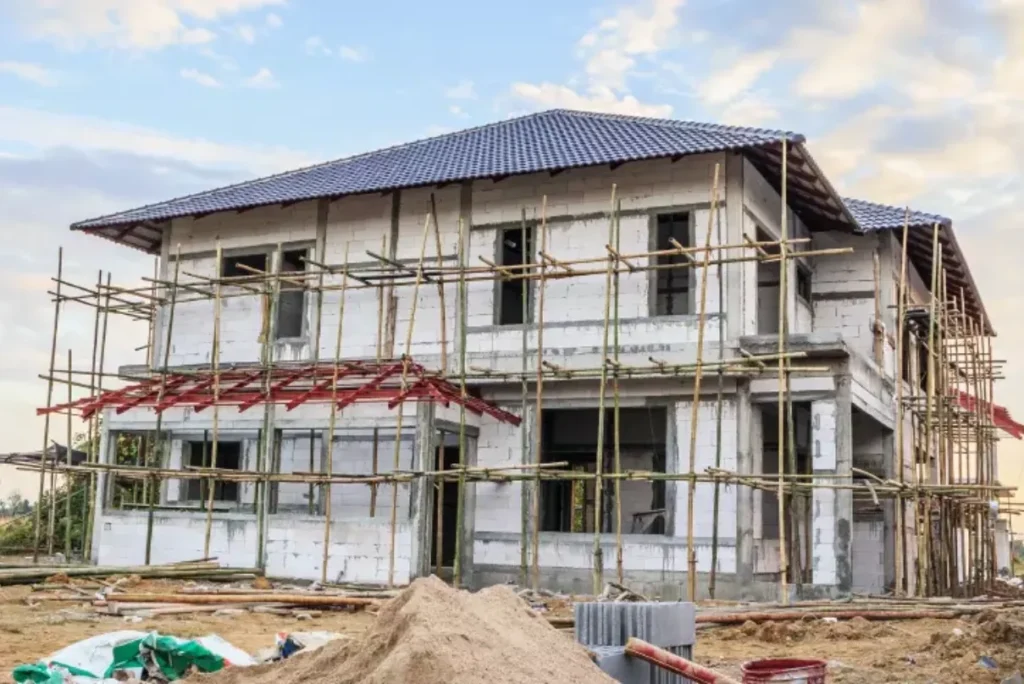
10. Add Overhead and Profit
Once all direct costs and general conditions are calculated, you must add company overhead and profit to arrive at your bid price.
Company Overhead
Company overhead includes all the costs of running your business that are not attributable to a specific project:
- Office rent, utilities, and administrative staff salaries
- Estimating and business development costs
- Accounting, legal, and IT expenses
- Vehicle costs for company-owned trucks and cars
- Marketing, advertising, and proposal preparation
- Software licenses and subscriptions
Calculate your overhead rate as a percentage of annual revenue. A typical contractor overhead rate ranges from 8 to 15 percent of revenue.
Profit Margin
Profit margins vary by market conditions, competition level, and project complexity:
- General contractors on commercial projects: 3 to 8 percent
- Residential contractors: 10 to 20 percent
- Specialty trade contractors: 8 to 15 percent
- Design-build projects with higher risk: 10 to 20 percent
In highly competitive markets such as public bid work in California or New York, profit margins are often compressed. In less competitive specialty markets or private-sector negotiated work, higher margins are achievable.
11. Account for Permits, Insurance, and Bonds
These costs are often overlooked in estimates but can be substantial on larger projects.
Building Permits
Permit fees are charged by the local authority having jurisdiction and are typically based on the project’s construction value or square footage. Permit fees vary significantly by location:
- New York City: Among the highest in the nation, permit fees often reaching 0.5 to 1.0 percent of construction value
- Los Angeles, CA: Permit fees calculated based on project valuation, often 1.0 to 2.0 percent of construction cost
- Houston, TX: Generally lower permit fees, typically 0.3 to 0.6 percent of construction value
- Miami, FL: Moderate fees, typically 0.5 to 0.8 percent
- Seattle, WA: Fees based on project value, typically 0.5 to 1.0 percent
- Denver, CO: Fees typically 0.4 to 0.7 percent of construction value
Insurance
Contractors must carry several types of insurance priced into every project estimate:
- General liability insurance, typically 1 to 3 percent of revenue
- Workers compensation insurance, rates vary by trade and state from 2 percent for clerical to over 20 percent for roofers in high-cost states
- Builder’s risk insurance, typically 0.5 to 1.0 percent of project value
- Commercial auto insurance
- Professional liability insurance for design-build work
Surety Bonds
Many public projects and larger private projects require performance bonds and payment bonds. Bond premiums are typically 0.5 to 2.0 percent of contract value, with lower rates for larger contracts and contractors with strong financial histories.
12. Include Contingency
Contingency is a reserve added to an estimate to cover unforeseen costs, scope uncertainties, and risks that cannot be fully quantified at the time of bidding. The appropriate contingency level depends on the project phase:
- Conceptual and preliminary estimates: 15 to 25 percent contingency
- Schematic design estimates: 10 to 15 percent
- Design development estimates: 5 to 10 percent
- Construction document estimates and bids: 2 to 5 percent
For projects in states with unpredictable weather or difficult site conditions, additional contingency may be warranted. Projects in Alaska, Minnesota, Wisconsin, and other northern states may require higher contingencies for weather delays and winter construction premiums. Projects in coastal areas of Florida, Louisiana, and the Gulf Coast region may require contingency for hurricane season scheduling risks.
13. Review Regional Cost Factors Across the United States
One of the most important aspects of construction cost estimating that contractors sometimes underestimate is the degree to which project location affects cost. Construction costs can vary by 50 percent or more between a low-cost rural market and a high-cost urban market in the same state, let alone between different states.
High-Cost States and Markets
California: California is consistently among the most expensive states for construction in the United States. Labor is expensive due to high prevailing wages on public projects and a strong union presence. Environmental regulations add compliance costs. San Francisco, Los Angeles, and San Jose are among the most expensive construction markets globally. Expect construction costs 20 to 50 percent above the national average in major California metros.
New York: New York City, particularly Manhattan, is the most expensive construction market in the United States. Union labor dominates commercial construction, with wage rates for skilled trades among the highest in the country. High-rise construction adds significant cost premiums for vertical logistics. Even upstate New York markets like Albany and Buffalo carry costs well above national averages.
New Jersey: Being adjacent to New York City, New Jersey carries similar labor cost pressures in the northern part of the state. Permit and inspection processes in many New Jersey municipalities can add time and cost to projects.
Washington: The Seattle metropolitan area has seen dramatic construction cost increases over the past decade driven by a technology sector building boom and tight labor supply. Labor rates are among the highest in the western United States outside of California.
Massachusetts: Boston is one of the most expensive construction markets in the Northeast. Union labor rates are high, and the dense urban environment adds logistical costs. Cold winter weather adds seasonal construction premiums.
Moderate-Cost States
Colorado: Denver and the Front Range have experienced significant construction cost growth due to population growth and a booming economy. Costs run roughly 10 to 20 percent above the national average in the Denver metro area.
Arizona: Phoenix and Tucson are moderate-cost markets. Labor rates are lower than coastal states, and material availability is generally good. Hot summer weather creates productivity impacts during peak heat months.
Georgia: Atlanta is a growing construction market with moderate costs. Labor rates are significantly lower than the Northeast or California. Atlanta has become a hub for large commercial and industrial construction projects.
North Carolina: The Research Triangle, which includes Raleigh, Durham, and Chapel Hill, and the Charlotte market are growing markets with moderate construction costs. Labor rates are lower than national averages, making North Carolina an attractive market for cost-conscious developers.
Florida: Florida is a large and diverse construction market. South Florida including Miami-Dade, Broward, and Palm Beach counties carries higher costs due to hurricane building codes and corrosion-resistant material requirements. Central and northern Florida markets are more moderately priced.
Lower-Cost States
Texas: Texas has historically been one of the most cost-competitive states for construction. No income tax, a business-friendly regulatory environment, and lower labor rates compared to coastal states make Texas attractive for large-scale development. Dallas, Houston, and Austin are major construction markets with costs typically 10 to 20 percent below the national average.
Tennessee: Nashville and Memphis are growing markets with costs below national averages. Low labor costs and a streamlined permitting environment in many municipalities make Tennessee competitive.
Alabama, Mississippi, and Arkansas: These states generally have among the lowest construction costs in the country, with labor rates 30 to 50 percent below coastal market rates.
Indiana, Ohio, and Michigan: The Midwest offers moderate-to-low construction costs outside of Chicago’s influence. Labor rates are moderate, and material supply chains are well established.
14. Use Construction Estimating Software
Modern construction estimating software has transformed the speed and accuracy of the estimating process. Contractors who rely on manual spreadsheets for large, complex projects are at a significant disadvantage compared to competitors using purpose-built estimating platforms.
Leading Estimating Software Tools
- PlanSwift: Widely used for digital quantity takeoffs directly from PDF drawings. Allows users to organize quantities by trade and export data to Excel or estimating databases.
- Bluebeam Revu: A powerful PDF tool with markup, measurement, and quantity tracking capabilities. Popular with engineers and estimators for detailed document review and takeoff.
- ProEst: Cloud-based estimating software with cost database integration, bid management, and proposal generation features.
- STACK: Cloud-based takeoff and estimating platform popular with smaller contractors for its ease of use and built-in cost database.
- RSMeans Data Online: The industry-standard cost database for labor, material, and equipment pricing, updated annually with regional cost modifiers for every county in the United States.
- Sage Estimating: Enterprise-level estimating software used by large commercial contractors that integrates with project management and accounting systems.
- Xactimate: Widely used in the insurance restoration and remodeling sector for rapid estimating based on Xactivity pricing databases.
Investing in estimating software pays for itself many times over in labor savings, improved accuracy, and faster bid turnaround. Contractors who respond to bid opportunities more quickly and with greater accuracy win more work at better margins.
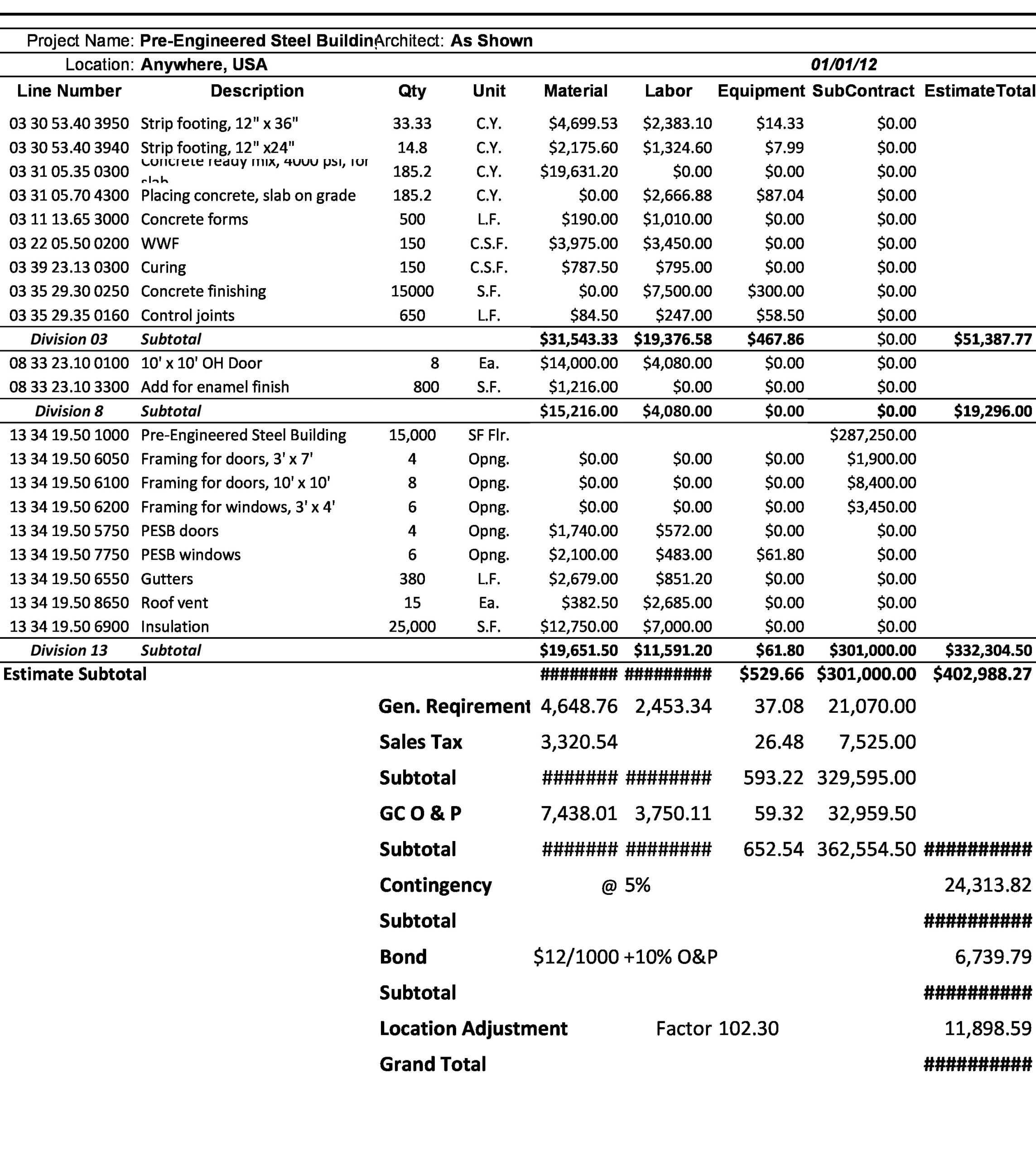
15. Compile and Present Your Estimate
Once all cost components have been calculated, compile them into a clear, organized estimate document. A well-presented estimate demonstrates professionalism and attention to detail, which builds confidence with clients and project owners.
Components of a Complete Estimate Package
- Cover page with project name, location, bid date, and your company information
- Summary sheet showing total costs by major category including sitework, concrete, framing, MEP, finishes, general conditions, overhead, and profit
- Detailed line-item breakdown for each trade and work section
- Quantity takeoff sheets supporting material quantities
- List of inclusions, exclusions, and clarifications
- Subcontractor and supplier bid list
- Assumptions and qualifications
- Validity period for the estimate
The inclusions, exclusions, and clarifications section is critically important. This is where you define exactly what is and is not included in your price. Clearly stating what you have excluded protects you from scope disputes during contract negotiations and project execution.
16. Review and Check Your Estimate
Before submitting any estimate or bid, conduct a thorough review. A structured review process catches mistakes before they become contract obligations.
Estimate Review Checklist
- Verify that all drawings and specification sections have been accounted for
- Check quantity calculations for arithmetic errors
- Confirm that material prices are current and from reliable sources
- Verify that labor hours and rates are reasonable for the scope
- Confirm that all subcontractor bids cover the required scope
- Check that overhead and profit have been applied correctly
- Verify that the total bid aligns with your preliminary budget or benchmark
- Confirm that all inclusions and exclusions are clearly documented
- Have a second estimator or senior colleague review the estimate independently
On large, complex estimates, consider running a sanity check using square foot cost benchmarks from comparable projects. If your detailed estimate comes in significantly higher or lower than the benchmark, investigate the reason before submitting.
17. Post-Bid Analysis and Continuous Improvement
Whether you win or lose a bid, the post-bid analysis is one of the most valuable activities for continuous improvement of your estimating process. If you lose a bid, request feedback from the owner or bid tabulations if they are publicly available. Compare your bid to competitors and identify where your costs were higher or lower.
If you win a bid, track actual costs against estimated costs throughout the project. Maintaining a project cost database of actual versus estimated costs is the single most powerful tool for improving future estimate accuracy. It allows you to update your production rates, verify your labor burdens, and refine your waste factors based on real project data.
Contractors who continuously refine their estimating process based on project feedback consistently outperform competitors who rely on static, outdated cost assumptions.
18. Common Estimating Errors to Avoid
Even experienced estimators make mistakes. Being aware of the most common estimating errors helps you build checks into your process to catch them before they reach the client.
- Missing scope items: Failing to include an entire trade or work section because a drawing was not reviewed carefully.
- Incorrect unit of measure: Pricing a material per linear foot when the quantity was measured in square feet, or vice versa.
- Outdated pricing: Using material prices from a previous project without checking current market rates, particularly for volatile commodities like lumber and steel.
- Forgetting escalation: On projects with long lead times, failing to account for expected cost escalation between the bid date and the construction period.
- Under-estimating general conditions: Assuming a project will take less time than it actually will, leading to an insufficient general conditions budget.
- Ignoring site conditions: Not reviewing the geotechnical report and failing to account for difficult soil conditions, high water tables, or rock excavation.
- Scope gaps with subcontractors: Not verifying that subcontractor bids cover all required scope, leading to scope holes that result in costly change orders.
- Arithmetic errors in spreadsheets: Formula errors in manual spreadsheets that go undetected. Using professional estimating software with built-in formulas reduces this risk significantly.
Get Accurate, Bid-Ready Estimates from Perfect Estimator
Accurate construction cost estimating takes years of experience, up-to-date cost data, the right software tools, and a thorough understanding of regional market conditions. Whether you are a contractor bidding on projects in California, Texas, New York, Florida, Georgia, Colorado, Washington, Arizona, New Jersey, North Carolina, or anywhere else across the United States, getting your estimate right is critical to your profitability and long-term business success.
At Perfect Estimator, we provide professional construction estimating services to contractors, developers, architects, and project owners nationwide. Our team of certified estimators uses industry-leading software including PlanSwift, Bluebeam, RSMeans, and Xactimate to deliver highly accurate, detailed estimates with fast turnaround times of 24 to 48 hours.
Our estimating services cover every trade and project type, including residential construction, commercial developments, industrial facilities, and specialty trade work. We provide detailed material takeoffs, labor cost estimates, subcontractor bid packages, and complete bid-ready estimate packages tailored to your project and your market.
We serve clients across all major US markets including New York City, Los Angeles, Houston, Dallas, Phoenix, San Diego, San Francisco, Seattle, Denver, Atlanta, Charlotte, Miami, Nashville, and hundreds of other cities and states. No project is too large or too small.
Stop leaving money on the table with inaccurate estimates. Partner with Perfect Estimator and get bid-ready estimates that are accurate, detailed, and delivered on time. Contact our team today to upload your plans and receive a free quote. Call us at +1 (212) 987-8789 or email info@perfectestimator.com.