Accurately calculating cubic yards is a fundamental skill for construction, landscaping, and material estimating. Whether you are a contractor, landscaper, property owner, or project manager, understanding how to calculate cubic yards can save you money, prevent material waste, and ensure your project runs smoothly.
In this detailed guide, Perfect Estimator explains everything you need to know about cubic yards: formulas, examples, conversions, tips for different materials, and professional advice for U.S.-based projects.
What Is a Cubic Yard?
A cubic yard is a unit of volume widely used in the United States to measure bulk materials such as:
- Concrete
- Soil and topsoil
- Mulch
- Gravel
- Sand
- Fill dirt
- Asphalt
Definition:
One cubic yard equals a cube measuring 3 feet × 3 feet × 3 feet, which is 27 cubic feet.
Formula:
1 cubic yard=3 ft×3 ft×3 ft=27 cubic feet1 \text{ cubic yard} = 3 \text{ ft} × 3 \text{ ft} × 3 \text{ ft} = 27 \text{ cubic feet}1 cubic yard=3 ft×3 ft×3 ft=27 cubic feet
Cubic yards are preferred in construction and landscaping because they simplify the ordering process for large volumes of materials.
Why Calculating Cubic Yards Is Important
Correct cubic yard calculations help you:
- Avoid over-ordering or under-ordering materials – reduce costs and waste.
- Plan accurately for construction or landscaping projects.
- Estimate materials for commercial and residential jobs.
- Ensure proper coverage for concrete, soil, or mulch.
- Prevent delays caused by insufficient materials on site.
A professional estimator always uses cubic yard calculations as part of project planning. Mistakes in measurement can lead to overspending or project delays.
Basic Formula for Cubic Yards
The standard formula to calculate cubic yards is:
Cubic Yards=Length (ft)×Width (ft)×Depth (ft)27\text{Cubic Yards} = \frac{\text{Length (ft)} × \text{Width (ft)} × \text{Depth (ft)}}{27}Cubic Yards=27Length (ft)×Width (ft)×Depth (ft)
Key Notes:
- All dimensions must be in feet.
- Depth in inches must be converted to feet (divide by 12).
- Always consider extra material for waste, compaction, or uneven surfaces.
Step-by-Step Guide to Calculate Cubic Yards
Step 1: Measure the Area
Measure the length, width, and depth of the area where material will be applied. Use a tape measure or site plans to get accurate dimensions.
Step 2: Convert Depth to Feet
If the depth is in inches, divide by 12 to convert to feet.
Example:
6 inches ÷ 12 = 0.5 ft
Step 3: Multiply the Dimensions
Multiply the length × width × depth to get the volume in cubic feet.
Step 4: Convert Cubic Feet to Cubic Yards
Divide the cubic feet by 27 to convert to cubic yards.
Formula Recap:
Cubic Yards=Length × Width × Depth27\text{Cubic Yards} = \frac{\text{Length × Width × Depth}}{27}Cubic Yards=27Length × Width × Depth
Real-World Examples
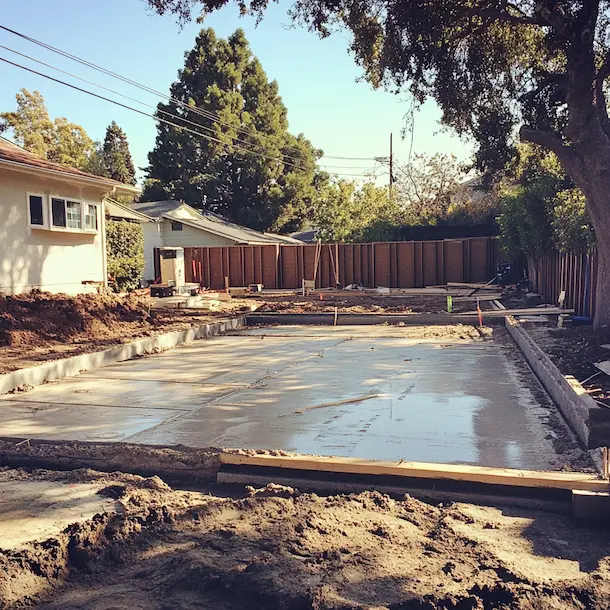
Example 1: Concrete Slab
Project: Driveway slab
- Length: 20 ft
- Width: 10 ft
- Thickness: 4 inches (0.33 ft)
Calculation:
20×10×0.33=66 cubic feet20 × 10 × 0.33 = 66 \text{ cubic feet}20×10×0.33=66 cubic feet 66÷27≈2.44 cubic yards66 ÷ 27 ≈ 2.44 \text{ cubic yards}66÷27≈2.44 cubic yards
Tip: Order 2.5 cubic yards to account for waste.
Example 2: Garden Bed with Mulch
Project: Garden bed
- Length: 15 ft
- Width: 8 ft
- Depth: 6 inches (0.5 ft)
Calculation:
15×8×0.5=60 cubic feet15 × 8 × 0.5 = 60 \text{ cubic feet}15×8×0.5=60 cubic feet 60÷27≈2.22 cubic yards60 ÷ 27 ≈ 2.22 \text{ cubic yards}60÷27≈2.22 cubic yards
Tip: Mulch settles over time, so add 10% extra.
Example 3: Gravel for Driveway
Project: Gravel driveway
- Area: 500 sq ft
- Depth: 3 inches (0.25 ft)
Calculation:
500×0.25=125 cubic feet500 × 0.25 = 125 \text{ cubic feet}500×0.25=125 cubic feet 125÷27≈4.63 cubic yards125 ÷ 27 ≈ 4.63 \text{ cubic yards}125÷27≈4.63 cubic yards
Order 5 cubic yards for coverage.
Tips for Different Materials
1. Concrete
- Round up to nearest 0.25 cubic yard.
- Add 5–10% extra for spillage and uneven surfaces.
2. Gravel & Crushed Stone
- Consider compaction after delivery.
- Add 10–15% extra to maintain proper coverage.
3. Soil & Mulch
- Mulch settles after a few weeks.
- Order slightly more than calculated for consistent coverage.
Cubic Yards Conversion Chart
| Cubic Feet | Cubic Yards |
| 27 | 1 |
| 54 | 2 |
| 81 | 3 |
| 108 | 4 |
| 135 | 5 |
This chart is useful for quick estimations and on-site calculations.
Common Mistakes to Avoid
- Forgetting to convert inches to feet.
- Using square footage instead of volume.
- Not accounting for compaction of gravel or soil.
- Ordering exact quantities without waste allowance.
- Ignoring irregular shapes or slopes on site.
Pro Tip: Always double-check calculations, especially for large commercial projects.
Advanced Tips for Contractors & Estimators
- Use a cubic yard calculator for large or irregular areas.
- Separate calculations for different sections or materials.
- Adjust depth for uneven surfaces or slopes.
- Add waste percentages for safety (5–15% depending on material).
- Document measurements for future reference.
Frequently Asked Questions (FAQs)
Q1: What is 1 cubic yard in feet?
A: 1 cubic yard equals 27 cubic feet (3 ft × 3 ft × 3 ft).
Q2: How do I calculate cubic yards from inches?
A: Convert inches to feet by dividing by 12, then multiply by length × width and divide by 27.
Q3: How many cubic yards of concrete do I need?
A: Calculate volume, divide by 27, and add 5–10% extra for waste.
Q4: Do cubic yard calculations change for different materials?
A: The formula stays the same, but waste factors differ. Gravel or mulch usually require extra material.
Q5: Should I round up or down when ordering?
A: Always round up to ensure full coverage and account for minor errors.
Conclusion
Learning how to calculate cubic yards is essential for contractors, landscapers, and homeowners. Proper calculations ensure accurate material ordering, cost savings, and successful project completion.
At Perfect Estimator, we specialize in professional volume and material calculations for construction and landscaping projects across the United States. Using these techniques ensures efficiency, precision, and a hassle-free project experience.